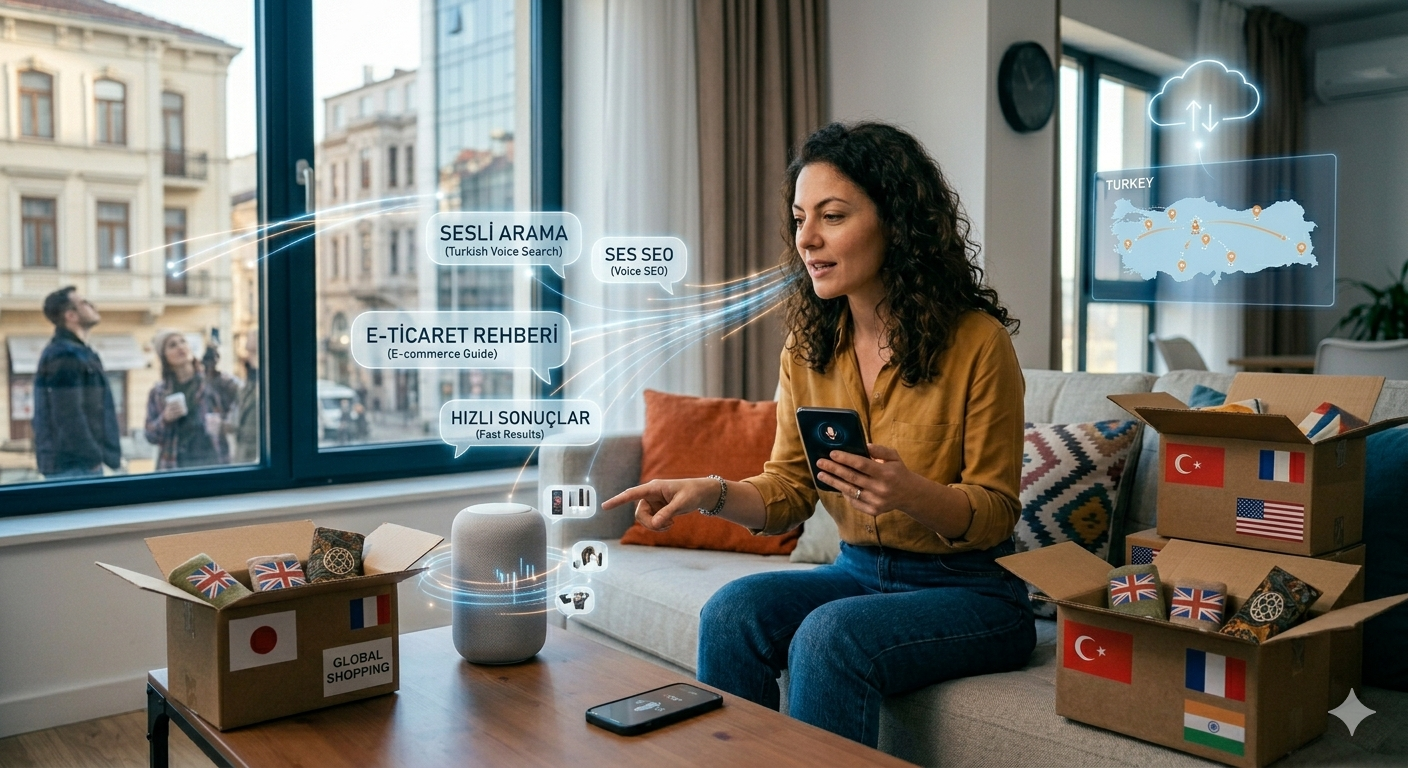
Voice search optimisation, or voice SEO, has become one of the most important items on the digital marketing agenda with the spread of smart speakers and voice assistants. According to Comscore's estimates, around half of all searches are now carried out by voice. This radical shift calls for a new approach to optimisation that goes beyond traditional SEO strategies. For e-commerce businesses, voice search is becoming a critical channel for both product discovery and local store searches.
The Rise and Importance of Voice Search
The trio of Google Assistant, Apple Siri and Amazon Alexa dominates the voice search ecosystem. While each of these assistants offers different search infrastructures and usage scenarios, their common denominator is that they respond to queries optimised for spoken language. As of 2024, more than 8 billion voice assistant-enabled devices are in active use worldwide, and this number continues to grow every year. In Turkey too, voice search usage is rising rapidly as smartphone penetration increases and Turkish language support improves. For e-commerce businesses, this trend makes visibility in voice search queries unavoidable.
- Mobile Voice Search: Smartphone users are conducting a growing share of their daily searches by voice. Voice search is preferred in particular while driving, cooking and walking.
- Smart Speakers: Home assistants such as Amazon Echo and Google Nest are increasingly used for creating shopping lists and ordering products.
- Instant Information Queries: Users turn to voice search when they need information quickly; for this reason, winning the featured snippet position is of critical importance.
Conversational Keywords and Long-Tail Queries
The most striking difference between voice search queries and typed searches is their closeness to natural spoken language. In a typed search the user writes 'cheap trainers Istanbul', whereas in a voice search they ask 'What are the cheapest trainers I can buy in Istanbul?'. This difference fundamentally changes your keyword strategy. Long-tail queries that begin with question words (what, where, how, when, who, why) form the focus of voice search optimisation. A conversational tone should be the foundation of your content production.
Featured Snippet Optimisation
When answering user queries, voice assistants rely heavily on featured snippets, also known as position zero results. Google reads the selected content aloud to the user. To win a featured snippet, your content must meet certain criteria: answer the question clearly and directly, ideally keep the answer between 40 and 60 words, present it in a structured and easily scannable format, and place it on a high-authority page. Of paragraph snippets, list snippets and table snippets, the type most commonly used for voice search is the paragraph snippet.
Voice Search and Local SEO
A significant share of voice searches carries local intent. Queries such as 'Where is the best coffee shop near me?' and 'Which is the closest electronics store to me?' show how critical Google My Business optimisation is for voice search success. Make sure your Google My Business profile is complete and up to date. Address, telephone number, opening hours and customer reviews must be kept accurate and current. NAP consistency, meaning that the business name, address and phone number are identical across all digital platforms, plays a decisive role in local voice search rankings.
The Importance of an FAQ Page for Voice Search
A frequently asked questions page is one of the most powerful tools in voice search optimisation. The question-and-answer format matches the natural conversational structure that voice assistants look for. Creating comprehensive FAQ pages for every product category and core service significantly increases visibility in voice search. When creating FAQ pages, think about the questions real users would want to ask: 'How many days will it take to receive this product?', 'What is your returns policy?', 'Which payment methods do you accept?' Answers should be plain, clear and directly related to the question.
Page Speed and Technical SEO
Voice search optimisation covers not only the content dimension but the technical infrastructure too. Google favours fast-loading pages in voice search results. Meeting the Core Web Vitals metrics, in other words optimising LCP, FID and CLS values, is critical for voice search rankings as well. An HTTPS secure connection is mandatory and has now become a standard requirement. Mobile-friendliness is also a priority, since the vast majority of voice searches are carried out on mobile devices. Implementing AMP, or Accelerated Mobile Pages, is one of the effective ways to increase page speed.
Structured Data with Schema Markup
Schema markup is a form of structured data that gives search engines additional context about the meaning of your content. The schema types of particular importance for voice search are as follows: FAQPage schema helps voice assistants better understand question-and-answer pairs. Product schema makes product information such as price, stock status and review rating machine-readable. LocalBusiness schema clearly defines business information and geographic location. HowTo schema makes it easier for content containing step-by-step instructions to be read out directly by voice search.
Voice Shopping Trends in E-Commerce
Voice shopping, or voice commerce, is also known as 'v-commerce' and is becoming a rapidly growing e-commerce channel. Ordering products via Amazon Alexa, comparing prices through Google Assistant and tracking orders via Siri are starting to become commonplace. For e-commerce businesses, the practical implication of this trend is that product names and descriptions must be voice-search-friendly. Instead of complex product names or terms containing jargon, expressions that users can say in natural spoken language should be preferred. Developing Alexa Skills and Google Actions for voice commerce can also be considered as an advanced strategy.
Frequently Asked Questions
What is the difference between voice SEO and traditional SEO?
While traditional SEO focuses on short, keyword-dense content, voice SEO targets long-tail content written in natural spoken language and in a question-and-answer format. In voice search, winning the featured snippet position can be more valuable than ranking first in traditional search, because voice assistants generally read out only a single answer.
How do you optimise for voice search in Turkish?
For Turkish voice search optimisation, your content needs to be written in a question format that suits spoken Turkish. Because of the agglutinative structure of Turkish, several word forms can express the same concept; semantic variations should therefore be taken into account and content enriched to cover different question formulations. Turkish Google My Business and local SEO optimisation are also of critical importance.
How widespread is voice shopping?
According to research by OC&C Strategy Consultants, voice commerce volume is growing rapidly and is reaching a market worth billions of dollars, particularly in the US and the UK. Although Turkey is still at an earlier stage, voice shopping habits are developing alongside the growth in smart speaker sales. Businesses that optimise now will gain a significant advantage as this trend progresses.
How do you win a featured snippet?
To win a featured snippet, your target keyword first needs to be turned into a question that answers the queries being made. Place the answer in a clear and accessible section of your content, ideally near the top of the page. Keep the answer to 40-60 words. Use relevant header tags and add FAQPage schema. Analyse the competitors currently holding the featured snippet in the SERP and aim to produce more comprehensive and up-to-date answers.
Conclusion
Voice search optimisation, or voice SEO, has become a growing field that e-commerce businesses cannot afford to ignore. Businesses that combine natural language content, FAQ pages, schema markup, page speed and local SEO optimisation will be best placed to make the most of the opportunities voice search offers. Contact Toserof Tech. for AI and e-commerce solutions.