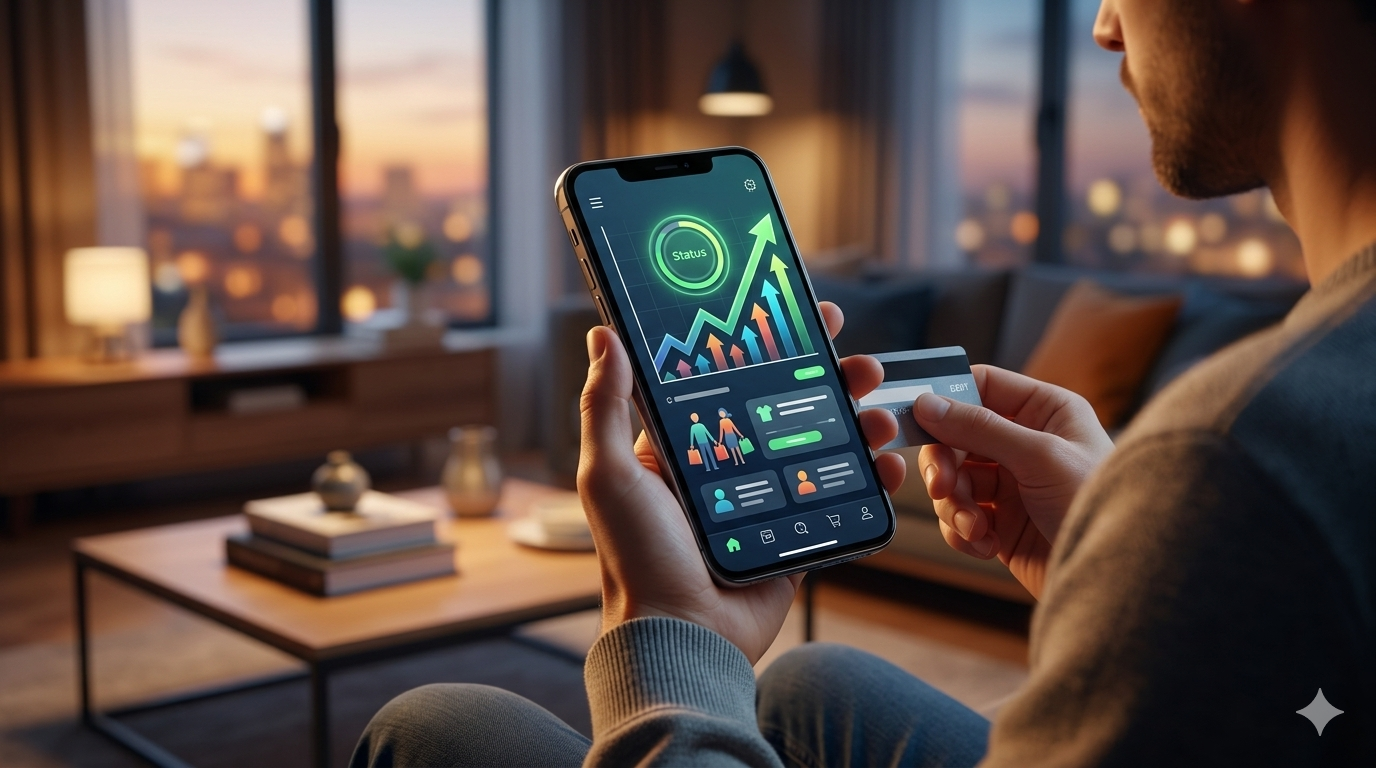
A mobile app in e-commerce is no longer a luxury but a competitive necessity. While 73 percent of global e-commerce traffic comes from mobile devices, app users generate a conversion rate 3 times higher than mobile web users. In this article we take a detailed look at 10 proven ways to increase your e-commerce sales through a mobile app.
The Growth of Mobile Commerce and the Opportunities
According to Statista data, global m-commerce (mobile commerce) volume reached 4.5 trillion dollars in 2025. In Turkey, mobile shopping accounts for 65 percent of total e-commerce turnover. These figures clearly show that e-commerce businesses that do not invest in a mobile app are suffering serious revenue loss. Once customers have installed your app, brand loyalty and repeat purchase rates rise dramatically.
- Higher Conversion Rate: App users show a 157 percent higher conversion rate than mobile web users, because the app offers a faster, smoother and more personalised experience.
- Lower Acquisition Cost: No advertising spend is needed to reach a user who has already downloaded the app; push notifications provide high reach at zero cost.
- Longer Session Duration: App users spend 3-4 times as long as they do on the mobile site, which increases cross-selling and upselling opportunities.
- Offline Access: In PWAs and native apps, being able to access some content without an internet connection strengthens the user experience.
Native App, PWA and Hybrid App: Choose the Right Technology
When developing an e-commerce app, the choice of technology determines both your budget and your performance. Evaluating the pros and cons of the three main approaches prevents a misguided investment.
Native App (iOS and Android)
Native apps are solutions developed separately for each platform and offer the highest performance. They provide full access to device features such as the camera, GPS and biometric authentication. However, development costs are high; separate teams or budgets are required for iOS and Android. They are the ideal choice for high-volume e-commerce businesses.
Progressive Web App (PWA)
PWAs are solutions built with web technologies that can behave like an app. They can be added to the home screen without an app store, send push notifications and work offline. Development costs are 60-70 percent lower than for a native app. They are an excellent alternative for early-stage or mid-sized e-commerce businesses.
10 Mobile Strategies That Increase E-Commerce Sales
Once you have made the technology decision, it is time to implement the strategies that will turn your app into a growth engine. The 10 methods below are tactics backed by real data that can be applied immediately.
- Personalised Push Notifications: Segmentation-based notifications generate a click-through rate 4 times higher than generic notifications. Notifications tailored to the user's past shopping behaviour increase conversion.
- In-App Payment Optimisation: Payment friction should be minimised by adding Apple Pay, Google Pay and one-tap payment options. Every additional step reduces the conversion rate by 20 percent.
- Mobile-Exclusive Promotions: Discounts and early-access campaigns offered only to app users encourage app downloads and reinforce user loyalty.
- App Store Optimisation (ASO): Increase organic app downloads by optimising the title, description and screenshots. With the right keywords you can climb to the top ranks in the App Store and Google Play.
- Deep Linking Strategy: Deep links that take users arriving from social media or email campaigns directly to the relevant product page prevent losses in the conversion funnel.
- Biometric Authentication: Completing the login process in seconds with Touch ID and Face ID integration offers real convenience in the shopping experience and reduces the basket abandonment rate.
- User Retention Strategies: Personalise the onboarding experience, deliver meaningful value within the first 30 days and create win-back campaigns to re-engage inactive users.
- In-App Search Optimisation: Help users find what they are looking for quickly by adding smart search suggestions, typo tolerance and visual search features.
- Social Proof Integration: Real-time stock status, how many people are viewing the same product and details of recent purchasers create a FOMO effect that triggers immediate sales.
- App Performance Monitoring: Track user behaviour with Firebase, Mixpanel or Amplitude; identify bottlenecks and build a continuous improvement loop.
Frequently Asked Questions
How long does it take to develop an e-commerce app?
A native e-commerce app with core features takes 3-6 months on average, while PWA solutions can go live in 6-10 weeks. Extensive features and custom integrations extend the development time. By developing with an agile methodology, an MVP can be launched first and then expanded through iterations.
What is the minimum budget for a mobile app?
In Turkey, the cost of developing an e-commerce app ranges between 50,000 TL and 500,000 TL. PWA solutions sit at the lower end of this range, while a fully featured native app approaches the upper end. Costs differ significantly when working with development teams abroad.
How do I increase push notification open rates?
Personalisation, timing and content quality are the three key determinants of push notification success. Notifications sent according to the user's local time, addressing them by name and offering real value can reach open rates of 40-60 percent. Sending too many notifications, on the other hand, increases the app uninstall rate.
How can organic downloads be increased with ASO?
For App Store Optimisation, use your main keywords in the title and the first 3 sentences, dedicate the first 3 screenshots to your most valuable features and maintain a rating above 4 stars. Responding regularly to user reviews increases both trust and your store algorithm score.
Conclusion
A mobile app e-commerce strategy begins with choosing the right technology and grows through continuous optimisation. From push notifications to ASO, from deep linking to biometric authentication, every strategy has the potential to turn your app into a sales machine. Contact Toserof Tech. to optimise your e-commerce strategy.