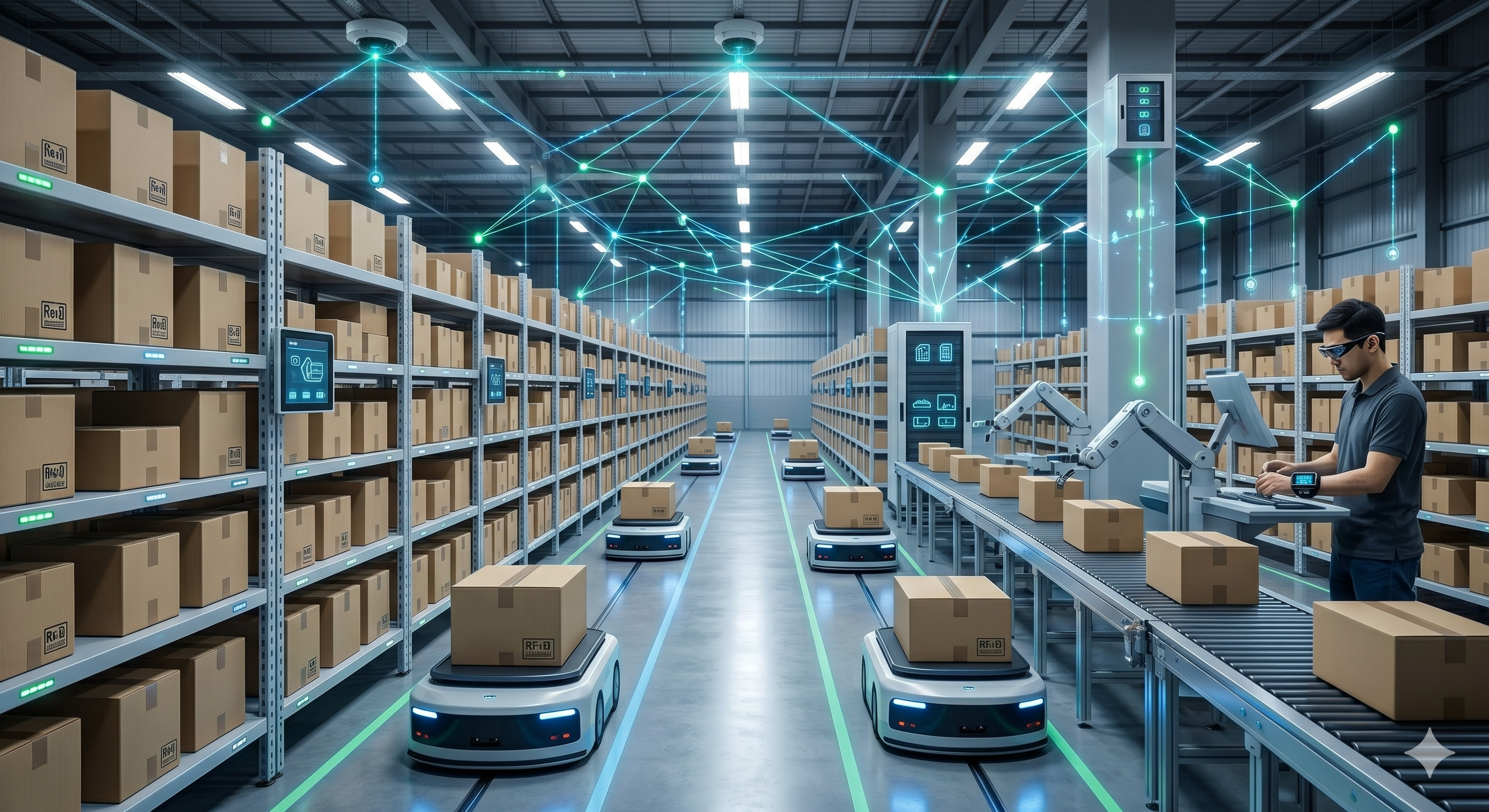
IoT smart logistics for e-commerce is digitising the supply chain end to end and dramatically increasing operational efficiency. Internet of Things (IoT) technology provides real-time visibility at every point, from warehouses to vehicle fleets, and from last-mile delivery to cold chain management. For e-commerce companies this means preventing stock losses, shortening delivery times and increasing customer satisfaction. In this guide we examine how IoT is transforming e-commerce logistics.
IoT Smart Logistics for E-Commerce: Fundamentals and Applications
IoT is the technology that enables physical objects to collect and share data over the internet through sensors, software and connectivity technologies. IoT applications in the e-commerce and logistics sector have reached a ground-breaking level. Every pallet, every shelf and every vehicle in a warehouse can now transmit real-time location and status data. This data is analysed on a central management platform to inform operational decisions. As of 2026 the global IoT logistics market has exceeded 40 billion dollars, and growth continues unabated.
- RFID Tags: Unlike barcodes, radio frequency identification technology does not require line of sight for reading and can scan hundreds of tags simultaneously in seconds, pushing stock accuracy above 98 per cent.
- Barcode Scanner Systems: Modern 2D barcode scanners offer solutions that carry far more data through QR codes and Data Matrix codes and provide error-free product tracking.
- Smart Shelving Systems: Smart shelves equipped with weight sensors and RFID readers automatically monitor stock levels and trigger replenishment orders.
Cold Chain and Temperature Monitoring Systems
For e-commerce companies selling food, pharmaceuticals and chemical products, cold chain management is critically important. IoT temperature sensors guarantee that products are kept within a specified temperature range both in the warehouse and in transit. Wireless sensors continuously send data to cloud platforms via GSM modules. When the temperature exceeds the specified threshold, instant alarm systems are triggered and response teams are alerted. With blockchain integration, temperature records are stored immutably, ensuring regulatory compliance and quality assurance. These systems significantly reduce food waste and pharmaceutical disposal.
Vehicle Tracking Systems and Fleet Management
GPS-based vehicle tracking systems monitor the real-time location, speed and route of logistics fleets. IoT sensors also track the vehicle's fuel consumption, engine health and driver behaviour, enabling proactive maintenance planning. Advanced fleet management software evaluates variables such as traffic conditions, weather and delivery windows in real time to dynamically calculate optimal routes. This optimisation can reduce fuel consumption by 15 to 25 per cent and increase delivery capacity. Sending customers instant delivery notifications and estimated arrival times is also a product of these systems.
Last-Mile Delivery IoT Solutions
Last-mile delivery is the most costly and complex link in the logistics chain. IoT technology is revolutionising this area too. Smart mailboxes and parcel locker systems offer secure delivery when the customer is not at home. These systems, verified by QR code or PIN, significantly increase delivery success rates. Autonomous delivery robots have begun carrying out short-distance deliveries within cities. Drone delivery technology, meanwhile, is developing rapidly for remote areas and urgent deliveries. Integrated with IoT sensors, these systems report delivery events in real time and improve the customer experience.
Warehouse Robots and the Amazon Robotics Model
Amazon Robotics (formerly Kiva Systems) provides the best example of modern warehouse automation. Hundreds of autonomous mobile robots carry the pods that store products on shelves directly to human picking stations. In this system the products come to the people rather than the people leaving their stations, so picking efficiency increases dramatically and walking distance is reduced. Alternative solutions such as Locus Robotics, 6 River Systems and Fetch Robotics offer cost-effective robot systems that can be integrated into existing warehouses. Alongside robots, automated conveyor systems, packing robots and carton sealing machines are other important components of warehouse automation.
- Autonomous Mobile Robots (AMR): Modern warehouse robots that require no fixed rail system, navigate on their own and can work alongside people.
- Automated Storage and Retrieval Systems (AS/RS): Systems optimised for high-density storage and rapid retrieval, making maximum use of vertical warehouse space.
- Collaborative Robots (Cobots): Packing and sorting robots that can work safely with people, are easy to programme and highly flexible.
Predictive Maintenance and IoT Data Analysis
Preventive maintenance for warehouse equipment and logistics vehicles prevents unexpected breakdowns. IoT sensors continuously monitor parameters such as vibration, temperature, humidity and electricity consumption. Machine learning models analyse this data to predict the probability of failure in advance. For example, an abnormal vibration pattern in a forklift motor can be detected weeks before a breakdown and planned maintenance can be scheduled. This approach significantly reduces the operational downtime and high emergency maintenance costs that arise from sudden breakdowns. IoT platforms that work in tandem with asset management systems centrally manage the maintenance history and performance metrics of all equipment.
Security Cameras and Intelligent Video Analytics
Modern warehouse security systems offer far more than cameras that simply record. AI-powered video analytics software can detect employee safety rule violations, unauthorised zone entries and suspicious behaviour in real time from camera footage. Product counting and flow analysis can be used to optimise conveyor efficiency. Object recognition technology can automatically flag misplaced or damaged products. With edge computing, camera footage is processed locally, reducing network bandwidth consumption and protecting privacy. These systems lower insurance costs and help maintain occupational safety standards.
Frequently Asked Questions
What is the minimum investment needed to get started with IoT warehouse automation?
It varies greatly depending on scale and the solution chosen. Setting up a basic RFID infrastructure and stock tracking system can start from 50,000-150,000 TL for small warehouses, while comprehensive robot automation can require an investment of millions of dollars. Many companies choose to minimise their initial outlay through a Robotics as a Service (RaaS) model rather than purchasing outright.
Should I use RFID or barcodes?
The two are not mutually exclusive; most modern warehouses use both. RFID is superior for environments that require bulk reading, rapid stock counts and tracking without line of sight. Barcodes, with their lower tag cost and simpler infrastructure requirements, are suitable for the early stages. Hybrid approaches are frequently preferred, depending on product value and operational need.
How is IoT security ensured?
IoT devices can carry more security vulnerabilities than traditional IT systems. Device authentication, encrypted communication (TLS/SSL), regular firmware updates, network segmentation and centralised security monitoring are the fundamental security layers. When selecting a manufacturer, security certifications and update commitments must always be assessed.
What is the payback period for an IoT logistics investment?
Independent research shows that IoT logistics investments pay for themselves within 18-36 months on average. Improved stock accuracy, better labour productivity, fuel savings and reduced product losses are the main sources of savings. In large-scale operations this period can be much shorter; Amazon has cut order processing time from hours to minutes through robot automation.
Conclusion
The IoT smart logistics ecosystem for e-commerce is fundamentally transforming traditional supply chain management. From RFID to warehouse robots, and from cold chain monitoring to predictive maintenance, every technology increases operational efficiency while reducing costs. Companies that adapt early to this transformation position themselves ahead of their competitors in terms of customer satisfaction and operational excellence. Contact Toserof Tech. for technology and data analytics solutions.