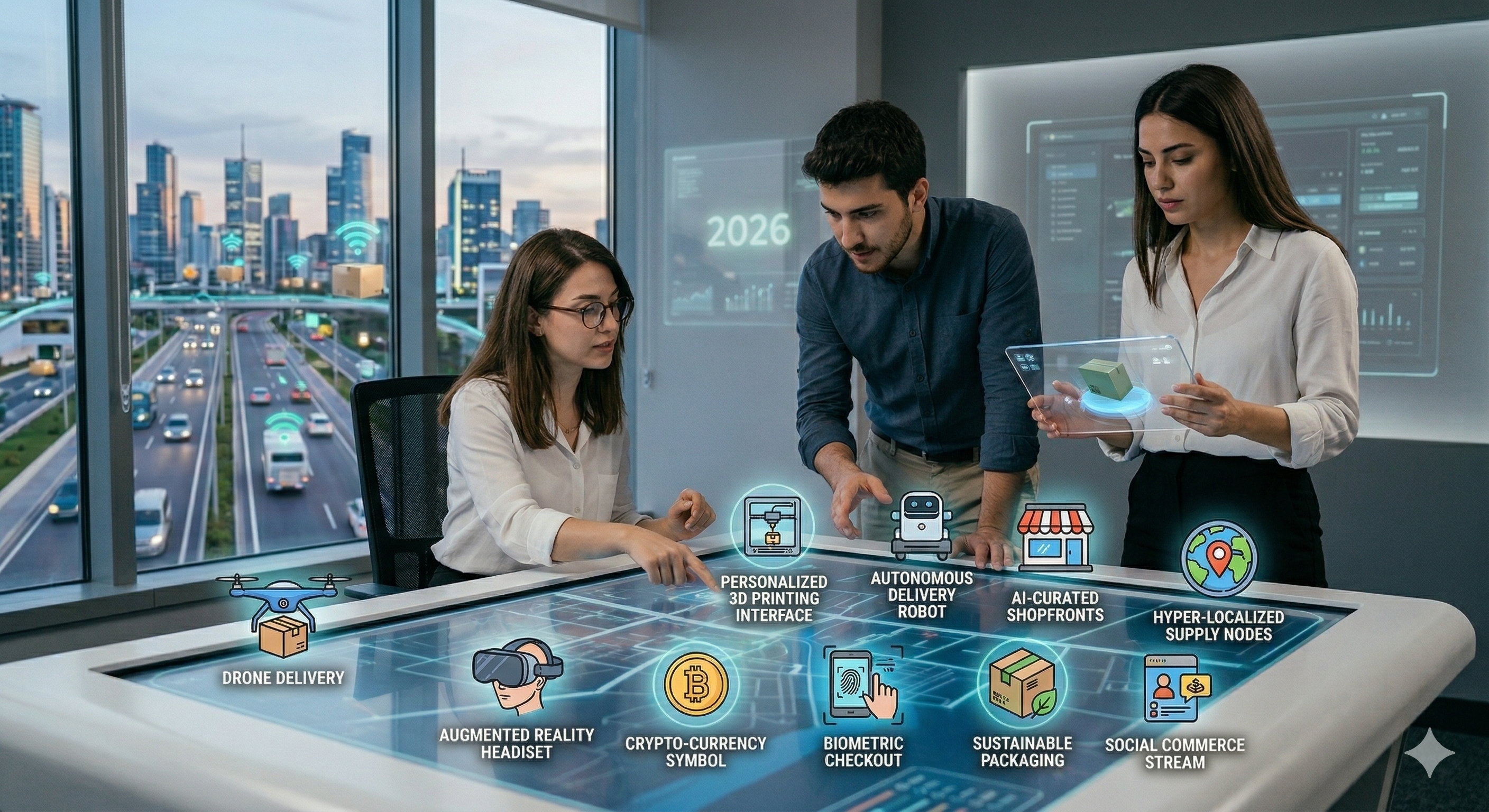
E-commerce trends for 2026 continue to take shape around artificial intelligence, social media shopping and sustainability. The global e-commerce market is expected to exceed eight trillion dollars by the end of 2026; businesses that want to take a leading position in this growth need to follow these ten trends closely. Here are the e-commerce dynamics that will define the future and how you can benefit from each of them.
1. AI-Powered Personalisation
Artificial intelligence has now moved beyond being a luxury reserved for large platforms and become an accessible tool for mid-sized e-commerce businesses too. AI engines that create personalised product recommendations, email campaigns and homepage layouts based on the customer's browsing history, purchasing behaviour, geographic location and even the time of day increase conversion rates by an average of thirty-five percent. Tools such as Klaviyo, Dynamic Yield and Nosto allow you to deploy this personalisation layer quickly. The businesses that stand out in 2026 are those using AI not only in the recommendation engine but also in dynamic pricing, predictive stock planning and customer churn prediction.
- Generative AI product descriptions: AI-powered content tools produce unique, SEO-friendly descriptions for thousands of products within minutes.
- Conversational AI: Advanced chatbots act as a personal shopping assistant during the purchase process and increase basket value.
- Visual search: The visual search feature, where users upload a product photo to find similar products, is going mainstream in 2026.
2. The Growth of Social Commerce
TikTok Shop, Instagram Shopping and Pinterest Product Pins have fully merged e-commerce with social media. Global social commerce volume is expected to approach one trillion dollars in 2026; more than sixty percent of consumers in the 18-35 age group have shopped through a social media platform at least once. At the centre of a social commerce strategy are authentic content, user-generated content (UGC) and influencer collaborations.
3. Sustainable E-Commerce
Seventy percent of consumers state that they treat a brand's environmental impact as a decisive factor in their purchase decision. Carbon-neutral shipping, recycled packaging, second-hand product marketplaces (recommerce) and carbon footprint labelling are the prominent sustainability elements of 2026. This trend is not merely an ethical choice; it is a concrete growth strategy that increases customer loyalty and repeat purchase rates.
4. Voice Commerce
Shopping carried out through Alexa, Google Assistant and Siri is growing rapidly for routine consumer goods (detergent, coffee, personal care products). Optimisation for voice commerce covers adapting product names to natural spoken language, targeting featured snippets and structured data markup. The use of Turkish-language voice assistants is also showing a marked increase in 2026.
5. AR/VR Integration
Augmented reality (AR) technology is spreading the 'try the product in your home' experience pioneered by IKEA in the furniture and decoration sector to every category. Cosmetics brands' virtual make-up trials, eyewear brands' frame-on-face simulations and footwear brands' AR size checks are reducing return rates by up to twenty-five percent. Thanks to WebAR technology, these experiences can now be offered through the browser without downloading an app.
6. Quick Commerce: Delivery in 15 Minutes
The fifteen-to-forty-five-minute delivery model pioneered by Getir, Gorillas and Flink now extends beyond groceries to electronics, cosmetics and household products. Dark store networks, robot-assisted logistics centres and route optimisation algorithms make this speed possible. In 2026, in major cities the 'order in the morning, delivered by noon' model is increasingly giving way to an 'order it, get ready' model.
7. Live Shopping and 8. The Subscription Economy
Live shopping has become a trillion-dollar market in China and is growing rapidly in Europe and Turkey too. Real-time product demonstrations, limited-time offers and audience interaction push conversion rates to five to ten times those of traditional content. The subscription economy, meanwhile, continues to be one of the strongest models in e-commerce in terms of recurring revenue, higher customer lifetime value (LTV) and reduced churn. Personalised subscription boxes are showing strong growth, particularly in the health, beauty and coffee categories.
9. Headless Commerce and 10. Blockchain Transparency
Headless commerce architecture separates the frontend (user interface) from the backend (order management, stock, payment) systems, delivering a consistent and fast shopping experience at every touchpoint (web, mobile, voice assistant, smart TV). This approach, also called composable commerce, increases speed to market and provides technological flexibility. Blockchain technology, meanwhile, is revolutionising supply chain transparency: brands that document a product's journey from origin to the customer's door with immutable records gain a strong competitive advantage, particularly in the luxury and organic food segments.
Frequently Asked Questions
What should be the top investment priority in e-commerce in 2026?
Although it varies by business size, AI-powered personalisation and mobile experience optimisation are the areas offering the highest ROI for almost every scale. If your existing customer base is sufficient, adding a subscription model raises LTV quickly. If your social media audience is strong, live shopping trials can create high impact on a low budget.
Is quick commerce feasible for small businesses?
While building your own dark store network requires major investment, integrating with existing platforms such as Getir and Yemek Sepeti Hızlı Market gives small and medium-sized businesses access to the quick commerce channel. As an alternative, local warehouse partnerships and last-mile logistics services can also be considered.
How long does a headless commerce migration take?
Depending on the existing infrastructure and the size of the product catalogue, a full headless migration can take from six months to two years. A phased migration (such as decoupling the mobile channel first) offers a lower-risk and more budget-friendly approach. Modern headless platforms such as Shopify Hydrogen or Commercetools shorten the migration process considerably.
Which platform should social commerce start with?
Platform choice varies according to the age of your target audience and your category. TikTok Shop stands out for the 18-30 age segment, while Instagram Shopping delivers more effective results for the 25-45 segment and visually driven categories (fashion, decoration, beauty). Running A/B tests and directing budget to the most effective platform is the most pragmatic approach.
Conclusion
The e-commerce trends of 2026 reward brands that bring technology together with a human-centred experience. Rather than trying to implement all ten trends at once, take gradual but determined steps by focusing on the trends where your business is strong and where your target audience is present. Contact Toserof Tech. for your e-commerce growth strategy.